Aviator strategy on 1win: bet sizing, targets and honest risk numbers
No system beats a game with RTP 97%, but the way you size bets and pick targets decides how fast a session can go wrong. Six popular approaches, worked through in rupees, with their real risk.
Updated · 18+
Contents 10 sections
What an Aviator strategy can and cannot do
Every 1win Aviator strategy you will find, from "safe 1.2x" to Martingale, works on the same game: an RTP of 97% and a multiplier fixed by a provably fair formula before the plane takes off. That gives two facts no trick can get around.
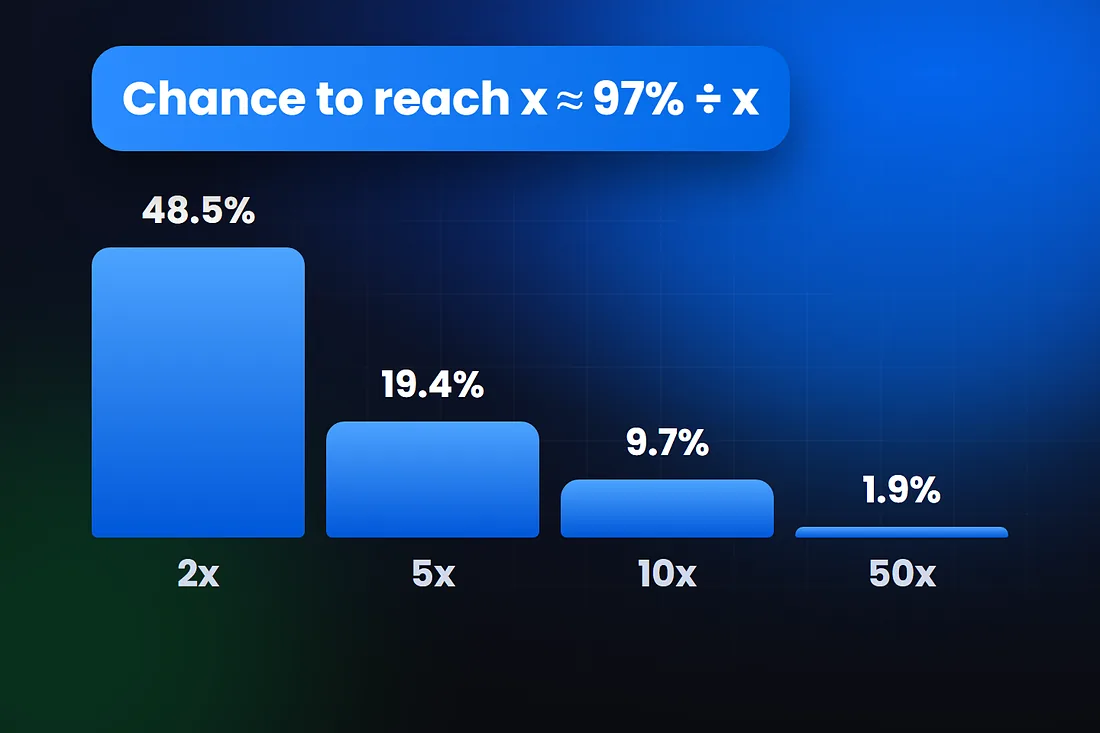
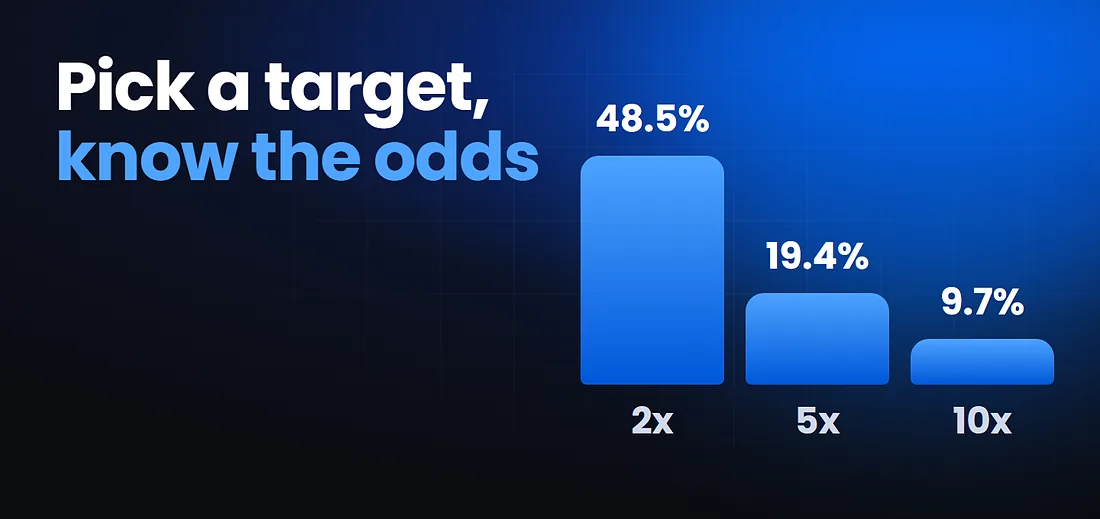
Every target has the same long-run value. The chance of reaching a multiplier x is about 97% divided by x. A ₹100 bet at 2x pays ₹200 in about 48.5% of rounds; at 10x it pays ₹1,000 in about 9.7%. Both work out to an average return of about ₹97 for every ₹100 bet.
Changing the bet size does not change that average. Raising stakes after losses or wins moves money around between sessions, but over thousands of rounds the 3% house edge applies to every rupee wagered.
So what is a strategy for? It decides the shape of your results: many small wins and rare big losses, or many small losses and rare big wins. It sets how long a budget lasts and how big the worst session can get. That is risk management, and it is worth doing well.
It also helps to know what kind of decisions you actually control in Aviator. There are only four: how much to bet, which multiplier to aim for, whether to use one bet panel or two, and when to stop. Everything else, the multiplier of the next round, the length of a run, the round where the plane flies away at 1.00x, is out of anyone's hands, including 1win's. The provably fair system exists precisely so that you can check this for yourself. The strategies below are simply different combinations of those four decisions; the basics of the game itself are in the overview of Aviator on 1win.
Aviator strategies compared at a glance
The table sums up the six approaches worked through below. "Hit rate" is the approximate share of rounds that reach the target.
| Strategy | Typical target | Hit rate | Bet size | Main risk | Risk level |
|---|---|---|---|---|---|
| Low multiplier | 1.30x | ≈ 74.6% | Fixed | One loss erases about three wins | Medium |
| Two bets | 1.50x + 20x | ≈ 64.7% / ≈ 4.85% | Fixed, split | Both bets lost on early crashes | Medium |
| Flat staking | 2.00x | ≈ 48.5% | Fixed share of budget | Slow, steady cost of the house edge | Low |
| Martingale | 2.00x | ≈ 48.5% | Doubles after a loss | Losing streak hits the budget or the maximum bet | Very high |
| D'Alembert | 2.00x | ≈ 48.5% | +1 unit after loss, −1 after win | Bets creep up in bad runs | High |
| Fibonacci | 2.00x | ≈ 48.5% | Follows 1-1-2-3-5-8… | Long runs grow bets fast | High |
Six Aviator strategies with examples in rupees
Each approach below is set up with Auto Cash Out, so the target is fixed before take-off. All amounts are based on the limits seen in the INR demo (minimum bet ₹10, maximum ₹8,000); your 1win account shows its own limits in Menu → Game Limits.
1. Low-multiplier strategy (1.20x–1.50x)
The idea: cash out early and win often. Example: ₹500 per round with Auto Cash Out at 1.30x. A hit pays ₹650, a profit of ₹150, and the plane reaches 1.30x in about 74.6% of rounds.
Risk: a single loss costs ₹500, the profit of more than three wins. About a quarter of rounds still end before 1.30x, including the roughly 3% that crash at 1.00x. Sessions feel calm until two or three early crashes come together.
2. Two-bet strategy: one safe, one high
Use both bet panels. Panel one: ₹300 with Auto Cash Out at 1.50x. Panel two: ₹50 with Auto Cash Out at 20x. Total stake ₹350 per round.
- Round ends below 1.50x (≈ 35% of rounds): both bets lost, −₹350.
- Round ends between 1.50x and 20x: panel one returns ₹450, result +₹100.
- Round reaches 20x (≈ 4.85% of rounds): ₹450 + ₹1,000, result +₹1,100.
Risk: the safe bet covers the high one in most rounds, but early crashes take both. You are paying ₹50 a round for a rare long flight.
3. Flat staking
Bet the same small share of your session budget every round and never chase. Example: budget ₹5,000, bet 2% = ₹100 per round at 2.00x. That is 50 bets before the budget is gone even if every one lost, which is extremely unlikely.
Risk: the lowest of the six. The cost of play is predictable: with a 3% house edge, 100 bets of ₹100 cost about ₹300 on average, though any single session can land well above or below that.
4. Martingale
Start with a base bet at 2.00x and double after every loss; return to the base after a win. Each win at 2.00x recovers all previous losses plus one base bet of profit. With a ₹10 base it looks like this:
| Bet no. | Stake | Total staked | Net if this bet wins | Chance of losing every bet up to here |
|---|---|---|---|---|
| 1 | ₹10 | ₹10 | +₹10 | ≈ 51.5% |
| 3 | ₹40 | ₹70 | +₹10 | ≈ 13.7% |
| 5 | ₹160 | ₹310 | +₹10 | ≈ 3.6% |
| 7 | ₹640 | ₹1,270 | +₹10 | ≈ 0.96% |
| 9 | ₹2,560 | ₹5,110 | +₹10 | ≈ 0.25% |
| 10 | ₹5,120 | ₹10,230 | +₹10 | ≈ 0.13% |
| 11 | ₹10,240 — above the ₹8,000 maximum bet of the INR demo | — | Not possible | — |
Risk: very high. You risk ₹10,230 to win ₹10. The streak that breaks the system looks rare, but you play many sequences, and with an ₹8,000 maximum bet the doubling stops at the 11th bet no matter how large your balance is.
5. D'Alembert
A gentler progression: add one unit after a loss, remove one after a win, never below the base. Example with a ₹100 unit at 2.00x: you lose ₹100, ₹200 and ₹300 (−₹600), then win ₹400 (+₹400, now −₹200) and win ₹300 (+₹300, now +₹100).
Risk: high. Bets grow more slowly than in Martingale, but a long bad run still pushes them up step by step, and wins do not always recover what was lost.
6. Fibonacci
Bets follow the sequence 1, 1, 2, 3, 5, 8, 13… units. Move one step forward after a loss, two steps back after a win. With a ₹10 unit at 2.00x the stakes are ₹10, ₹10, ₹20, ₹30, ₹50, ₹80, ₹130, ₹210, ₹340, ₹550. Ten losses in a row cost ₹1,430 in total.
Risk: high. Ten straight losses at 2.00x happen in about 0.13% of sequences, but shorter bad runs are common, and after them the bets stay high for a while.
A ₹2,000 session plan, step by step
A strategy only helps if it is written down before the first round. Here is one balanced plan for a session budget of ₹2,000, built from the approaches above.
- Fix the budget and the exits. Budget ₹2,000. Stop-loss: the session ends when the balance drops to ₹1,000. Stop-win: the session ends when it reaches ₹2,600.
- Size the bets. Main bet ₹40 (2% of the budget) on panel one, side bet ₹10 (the minimum in the INR demo) on panel two.
- Set the targets in the Auto tab. Panel one: Auto Cash Out at 1.80x. Panel two: Auto Cash Out at 15x. Turn on Auto bet for both only if you will stay at the screen.
- Play a fixed number of rounds. For example 60 rounds, then a ten-minute break, whatever the balance shows.
- Check "My Bet History" during the break. Compare how often each target was hit with the expected rates: about 53.9% for 1.80x and about 6.5% for 15x. A gap after only 60 rounds is normal and is not a reason to change the plan mid-session.
- Take profits off the table. If the stop-win is reached, close the game and move the winnings out through the cashier rather than playing them back.
The plan does not make the session profitable. It makes the worst case known in advance: ₹1,000 at most, with no chasing and no surprises. Winnings from Aviator land on the main balance at once, and the payout steps are in withdrawing Aviator winnings.
Martingale and flat staking calculator
Enter your bankroll, base bet and target multiplier. The calculator shows how many losses in a row your bankroll can absorb under Martingale or flat staking and the chance of busting.
Try a ₹5,000 bankroll with a ₹50 base at 2.00x under Martingale. You can afford six losses in a row (₹50 + ₹100 + ₹200 + ₹400 + ₹800 + ₹1,600 = ₹3,150); the seventh bet of ₹3,200 no longer fits. Six straight losses happen in about 1.9% of sequences, roughly once in every 50-odd. Over a few evenings of play that is not rare at all.
Test a strategy on simulated rounds
The simulator generates rounds with the same provably fair formula Aviator uses, then shows the spread of multipliers and how often your target was reached.
Set the target from the strategy you like and run several batches. Short batches swing a lot; long ones settle near the expected hit rate. That gap between short and long runs is what every progression system bets against, and loses to, sooner or later.
Which bet style fits you?
Four quick questions about your budget, patience and reaction to losses suggest a cautious, balanced or high-risk style and explain the risk that comes with it.
Whatever the result, practise it first in the free Aviator demo with the same bet sizes you plan to use for real.
Patterns, predictors and "best time to play" do not exist
Many players' first questions about Aviator are about tricks: a pattern, an algorithm, a time of day. Here is what is actually behind each one.
- "There is a pattern in the history strip"
- Each multiplier is calculated from a fresh server seed and the client seeds of the first three players who bet in that round. Earlier rounds play no part, so streaks of blue or pink are coincidences.
- "A low round means a high one is due"
- The chance of reaching 2x is about 48.5% in every round, after ten low rounds or after ten high ones.
- "Some hours pay better"
- The formula has no clock in it. A round at 3 a.m. and a round at 9 p.m. follow the same maths.
- "A predictor app or signal channel knows the next multiplier"
- It cannot. The result depends on client seeds from players who have not bet yet and on a server seed that is hashed before take-off. Predictors and signal bots are scams, and many APKs sold as predictors steal logins.
- "The algorithm can be cracked"
- The algorithm is public: server seed plus three client seeds, SHA-512, then a fixed formula. Knowing it lets you verify a past round, such as 12440911 at 28.31x, not predict the next one.

The full check of a round, step by step, is in verifying a provably fair round.
Bankroll rules that matter more than any system
Whatever strategy you choose, these habits decide how a session ends.
- Set a session budget before the first bet and keep it separate from money for bills and savings.
- Keep each bet small, 1–2% of the session budget, so a bad run does not end the session in minutes.
- Use Auto Cash Out with the target from your plan and do not change it mid-flight.
- Set a stop-loss and a stop-win. When either is reached, close the game.
- Never chase losses by raising stakes beyond the plan.
- Take breaks. Rounds last seconds, and a hundred rounds pass faster than it feels.
- Know the bonus rules before mixing bonus money into a plan; casino bonuses are wagered only in the "Bonus wagering" games, and on 25 November 2026 Aviator was not one of them.
If the game stops being fun, use the limits and self-exclusion options described in responsible gaming. Aviator on 1win is for players aged 18 and over. New to the controls? Start with how to play Aviator in 1win, then register on 1win with the promo code 1WCASIN when you are ready.
Aviator strategy questions
What is the best strategy for 1win Aviator?
There is no strategy that beats the 97% RTP. The most sensible approach is flat staking with small bets and Auto Cash Out at a target you choose in advance, plus a fixed budget and stop limits.
Is there a trick to win at Aviator?
No. Each result comes from a provably fair formula using seeds that nobody knows before the round. Tricks sold online either repeat basic bet sizing or are outright scams.
Is there a pattern in Aviator?
No. Every round is independent: earlier multipliers do not influence the next one. Runs of low or high rounds happen by chance and end by chance.
Is there any way to predict an Aviator game?
No. The multiplier depends on client seeds from the first three players who bet in the round and on a hashed server seed. Predictor apps and signal channels cannot know it and are scams.
What is the algorithm in the Aviator game?
The server seed and three client seeds are joined and hashed with SHA-512. The first 13 hex characters become a number that a fixed formula turns into the multiplier, with a minimum of 1.00x. It lets you check rounds, not forecast them.
Does Martingale work in Aviator?
It wins small amounts often and loses a large amount occasionally. From a ₹10 base at 2x, ten losses in a row mean ₹10,230 staked, and the next doubled bet exceeds the ₹8,000 maximum seen in the INR demo, so the system cannot recover.
Which multiplier is safest in Aviator?
Lower targets are reached more often: about 74.6% of rounds reach 1.30x and about 48.5% reach 2x. They are not safer in value, because the smaller payout balances the higher hit rate.
Can I earn money daily from Aviator?
No. Aviator is a game of chance with a 3% house edge, so it cannot work as a source of income. Some days end in profit and some in loss; treat any stake as the price of entertainment.
How to use an Aviator strategy calculator?
Enter your bankroll, base bet and target. The calculator shows the payout, the hit rate and how many losses in a row your bankroll survives. Use it to choose bet sizes, not to predict rounds.